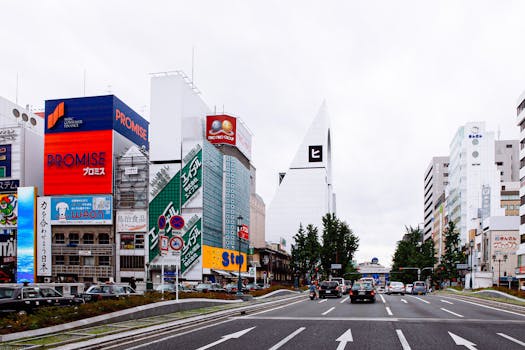
Billboard Advertising in Urban Landscapes: Shaping City Identity and Business Success
Walk through any bustling city, and chances are your eyes will catch a vibrant, towering billboard. These large-scale advertisements are more than just marketing tools—they're woven into the fabric of our urban environments. While digital ads and social media campaigns command much of today’s marketing buzz, billboard advertising continues to play a crucial role in the look, feel, and economic vitality of city landscapes. But what is it about billboards that makes them both a hallmark of city life and a powerful vehicle for businesses? Let’s explore the multifaceted role of billboard advertising in urban landscapes, from its influence on urban aesthetics to its measurable impact on commerce and community.
The Visual Impact: Billboards and Urban Identity
Billboards are not simply advertisements; they are landmarks. In cities like New York, Tokyo, and London, iconic billboards at Times Square, Shibuya Crossing, and Piccadilly Circus have become synonymous with the locations themselves. According to a 2022 report by the Outdoor Advertising Association of America (OAAA), 71% of city dwellers agree that billboards contribute to a city’s “vibe” or character.
Billboards can:
- Serve as visual anchors in neighborhoods, helping people orient themselves - Reflect the cultural pulse of a city through localized or creative designs - Contribute to urban art, especially when brands collaborate with local artistsConsider the example of Times Square: over 350,000 pedestrians pass through daily, with the illuminated billboards creating a signature atmosphere that draws tourists and locals alike. In some cases, billboards even become backdrops for films, parades, and social gatherings, thus integrating advertising into the daily life and memory of a city.
.png)
Billboards as Navigational and Informational Tools
Beyond their visual appeal, billboards provide practical information. Historically, billboards have guided travelers to nearby restaurants, hotels, or attractions. In the urban context, they often alert residents to events, public safety messages, or civic campaigns.
For example, during the COVID-19 pandemic, cities like Los Angeles and Chicago utilized digital billboards to display health guidelines and real-time updates. According to Clear Channel Outdoor, over 87% of surveyed urban residents recalled seeing important public service messages on billboards between 2020 and 2022.
This dual role as both commercial and informational displays makes billboards a unique medium, blending business objectives with community service. Their large format and strategic placement—often at high-traffic intersections or transit hubs—ensure visibility for both ads and announcements.
The Economics of Billboard Advertising in Cities
Billboard advertising is a significant economic driver, both for local governments and businesses. The global out-of-home advertising market was valued at $33.5 billion in 2023, with urban billboard placements accounting for nearly 60% of industry revenue, according to Statista.
Key economic impacts include:
- Revenue generation for cities through permit fees, taxes, and lease agreements - Opportunities for small and medium enterprises (SMEs) to reach large, diverse audiences - Job creation in advertising, design, fabrication, and maintenance sectorsLet’s look at a comparative overview of billboard types and their average costs in major U.S. cities:
| City | Standard Billboard (Monthly) | Digital Billboard (Monthly) | Potential Daily Impressions |
|---|---|---|---|
| New York | $12,000 - $50,000 | $25,000 - $80,000 | 500,000+ |
| Los Angeles | $8,000 - $40,000 | $18,000 - $65,000 | 400,000+ |
| Chicago | $7,500 - $35,000 | $16,000 - $55,000 | 350,000+ |
| Houston | $6,000 - $23,000 | $13,000 - $40,000 | 250,000+ |
The data underscores both the high visibility and the premium nature of billboard advertising in urban cores. For many brands, these costs are justified by the sheer reach and frequency with which their message is seen.
Technological Innovations: From Static to Smart Billboards
The evolution of billboard technology has transformed how advertisers engage with city dwellers. Traditional static billboards, while still common, are increasingly joined by digital and interactive displays. By 2023, digital billboards accounted for 32% of all U.S. billboard revenue—a number expected to rise as cities modernize their advertising infrastructure (Source: PwC Global Entertainment & Media Outlook).
Advancements include:
- Real-time content updates: Advertisers can change digital billboard messages instantly, allowing for timely promotions or event-based campaigns. - Data-driven targeting: Some billboards use sensors or mobile data analytics to tailor ads to the demographics of nearby audiences. - Augmented reality (AR) integration: Creative campaigns invite viewers to interact with billboards using smartphones, deepening engagement.For example, in London, a 2022 campaign by a major beverage brand used weather data to display different products depending on temperature and time of day. The result was a 12% increase in sales compared to static billboard campaigns.
Urban Planning, Regulation, and the Debate Over Billboards
While billboards can enliven urban spaces, they also spark debate among urban planners, residents, and policymakers. Concerns include visual clutter, distraction for drivers, and impacts on historic or residential neighborhoods. As a result, most cities enforce strict regulations on billboard size, placement, brightness, and even content.
Some notable facts:
- In São Paulo, Brazil, the 2007 “Clean City Law” led to the removal of over 15,000 outdoor ads, drastically altering the cityscape and sparking a global conversation about visual pollution. - In the U.S., the Highway Beautification Act of 1965 still shapes where and how billboards can be installed along federal highways and within urban areas.Modern cities strive to balance economic benefits with aesthetic and safety considerations. New York City, for example, limits billboard brightness and prohibits certain types of digital billboards near schools and parks. Meanwhile, cities like Tokyo embrace a more liberal approach, integrating billboards as a core feature of entertainment districts.
The ongoing debate challenges cities to find creative solutions: some now require billboard operators to contribute to public art or green space funds in exchange for permits, forging a new partnership between business and community.
Billboards and the Psychology of Urban Audiences
Billboards succeed in cities because they blend seamlessly with the rhythms of urban life. According to Nielsen’s 2022 Out-of-Home Advertising Study, 83% of urban commuters notice billboards during their weekly routines, and 46% report that a billboard prompted them to search for a product online or visit a store.
Psychological factors at play include:
- Repetition: Commuters see the same billboards multiple times, reinforcing brand recall. - Contextual relevance: Urban billboards can be tailored to local culture, events, or weather, making them more memorable. - Visual dominance: Large, colorful displays cut through the clutter of city streets.A compelling example comes from a 2021 campaign in Chicago, where a local restaurant chain reported a 21% increase in foot traffic after launching a series of witty, location-specific billboard ads targeting morning commuters.
Looking Ahead: The Future of Billboards in Urban Life
As cities grow and technology evolves, the role of billboard advertising will continue to shift. Emerging trends include the use of green technology, such as solar-powered billboards and living plant walls, and more interactive experiences that blur the line between ad and art. With urban populations projected to reach 68% of the global total by 2050 (UN Department of Economic and Social Affairs), the importance of effective, responsible billboard advertising will only increase.
Urban planners, advertisers, and residents alike are reimagining how billboards can contribute positively to the city experience—by enhancing wayfinding, supporting local culture, and even becoming canvases for digital and traditional art.